








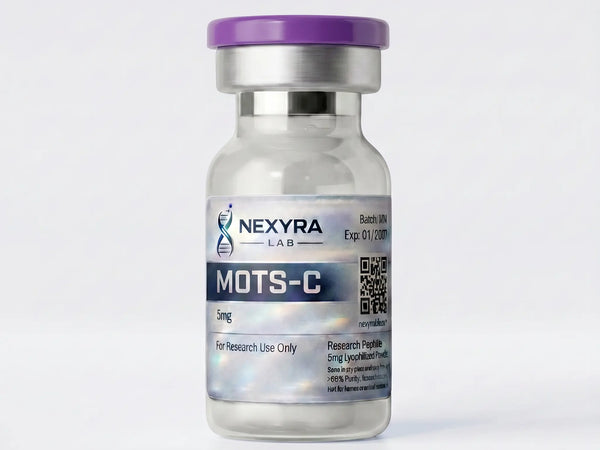












Unlocking Peak Performance: How MOTS-c Peptide Boosts Exercise and Fortifies Bones
Recent scientific studies are shedding light on a remarkable mitochondrial-derived peptide, MOTS-c, revealing its significant potential to enhance exercise performance and bolster both muscle and bone health. This naturally occurring peptide, found in the body, is emerging as a key player in metabolic regulation and cellular resilience.
Key Takeaways
- Enhanced Exercise Performance: MOTS-c has been shown to improve physical capacity and endurance in both young and old individuals.
- Muscle and Bone Health: The peptide plays a crucial role in regulating bone metabolism, promoting bone formation, and inhibiting bone resorption.
- Metabolic Regulation: MOTS-c aids in maintaining metabolic homeostasis, potentially offering benefits for conditions like insulin resistance.
- Exercise Mimetic: MOTS-c appears to mimic some of the beneficial effects of exercise, even when administered exogenously.
Boosting Physical Prowess
Research indicates that MOTS-c can significantly improve physical performance. Studies in mice have demonstrated enhanced running capacity and power output following MOTS-c treatment, regardless of diet. This improvement in physical capacity suggests MOTS-c's role in optimising energy metabolism within skeletal muscles. Furthermore, MOTS-c has shown promise in reversing age-related declines in physical function, enabling older mice to perform at levels comparable to younger, untreated counterparts.
Fortifying Muscle and Bone
Beyond exercise performance, MOTS-c is proving vital for musculoskeletal health. It actively promotes the proliferation, differentiation, and mineralisation of osteoblasts, the cells responsible for bone formation. Simultaneously, it inhibits the activity of osteoclasts, the cells involved in bone resorption. This dual action helps maintain a healthy balance in bone remodelling, crucial for preventing conditions like osteoporosis. The peptide also influences skeletal muscle metabolism, contributing to overall muscle homeostasis.
The Exercise Connection
Interestingly, exercise itself has been shown to upregulate the expression of MOTS-c. This suggests a natural feedback loop where physical activity stimulates the production of this beneficial peptide. Exogenous administration of MOTS-c can, in turn, elicit exercise-like effects, highlighting its potential as an 'exercise mimetic'. This connection underscores the intricate relationship between physical activity, mitochondrial function, and metabolic health.
Future Directions
While current research is highly promising, further investigation is needed to fully elucidate the mechanisms by which MOTS-c regulates bone metabolism and its precise role in exercise-induced adaptations. Understanding these pathways could pave the way for novel therapeutic strategies targeting skeletal metabolic diseases and enhancing physical resilience across the lifespan.
Sources
- Role of MOTS-c in the regulation of bone metabolism, Frontiers.
-
MOTS-c is an exercise-induced mitochondrial-encoded regulator of age-dependent physical decline and muscle
homeostasis, Nature. -
The mitochondrial signaling peptide MOTS-c improves myocardial performance during exercise training in rats |
Scientific Reports, Nature.