









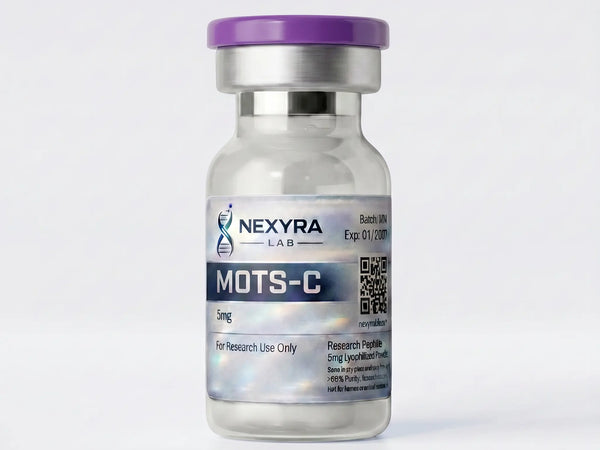














Breakthrough Peptide MOTS-c Shows Promise in Combating Diabetes and Enhancing Pancreatic Health
Recent scientific advancements have identified the mitochondrial-encoded peptide MOTS-c as a potential therapeutic agent for diabetes and a protector of pancreatic islet cell health. Research indicates that MOTS-c may play a crucial role in preventing cellular senescence, a key factor in the development of both type 1 and type 2 diabetes.
Key Takeaways
- Combating Cellular Senescence: MOTS-c has demonstrated the ability to reduce senescence in pancreatic beta cells, a process implicated in the progression of diabetes.
- Therapeutic Potential: Studies suggest MOTS-c could serve as a novel senotherapeutic drug for diabetes and related metabolic disorders.
- Mechanism of Action: The peptide appears to regulate metabolic pathways and mitochondrial function, offering a multi-faceted approach to treatment.
Understanding Diabetes and Cellular Senescence
Diabetes mellitus, characterised by the loss of pancreatic beta-cell mass and function, affects millions worldwide. A common underlying mechanism in both type 1 and type 2 diabetes is the senescence of pancreatic beta cells. This cellular aging process is associated with mitochondrial dysfunction, altered mitochondrial activity, and reduced mitochondrial DNA. The mitochondrial dysfunction-associated senescence (MiDAS) hypothesis suggests that these mitochondrial issues can drive beta-cell senescence and contribute to diabetes.
MOTS-c: A Novel Mitochondrial Peptide
Mitochondria, traditionally known for energy production, also encode short peptides with significant biological functions. MOTS-c (mitochondrial open reading frame of the 12S rRNA type-c) is one such peptide that has emerged as a key regulator of metabolic homeostasis. Its expression is age-dependent and found in various tissues, including the pancreas. Previous research has shown that systemic administration of MOTS-c can reverse insulin resistance in mice and mitigate autoimmune pancreatitis.
MOTS-c's Role in Pancreatic Health
New research indicates that MOTS-c treatment significantly reduces pancreatic islet and beta-cell senescence across multiple mouse models of diabetes, including aged mice, nonobese diabetic (NOD) mice, and mice with induced beta-cell senescence. The peptide appears to regulate metabolite transport, specifically the aspartate-glutamate pathway, to reduce glutaminolysis-dependent senescence in pancreatic islet and Min6 cells, thereby delaying the onset of diabetes.
Therapeutic Implications
MOTS-c's ability to prevent beta-cell senescence and its positive impact on metabolic regulation suggest its potential as a therapeutic agent. Studies have also shown that MOTS-c can mimic the beneficial effects of aerobic exercise in combating liver fibrosis associated with type 2 diabetes by targeting the Keap1-Nrf2-Smad2/3 pathway. This dual action highlights MOTS-c's broad therapeutic potential in managing complex metabolic diseases.
Sources
-
Mitochondrial-encoded peptide MOTS-c prevents pancreatic islet cell senescence to delay diabetes |
Experimental & Molecular Medicine, Nature. - MOTS-c mimics exercise to combat diabetic liver fibrosis by targeting Keap1-Nrf2-Smad2/3, Nature.
- Histology of pancreatic islets without and with MOTS-c treatment [IMAGE], EurekAlert!.