
















New Research Uncovers Link Between MOTS-c Levels and Polycystic Ovary Syndrome
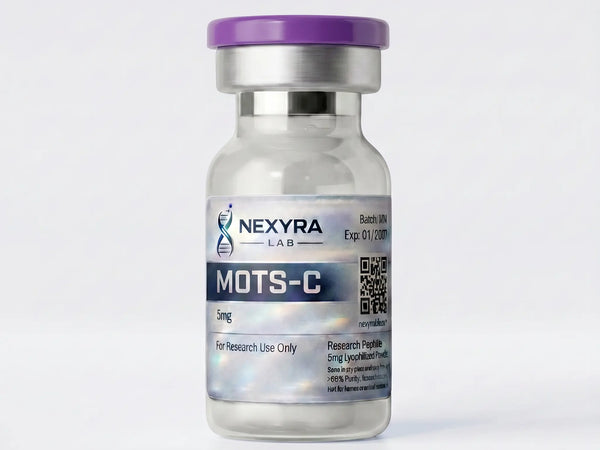
Recent scientific findings have established a significant connection between reduced levels of the mitochondrial-derived peptide MOTS-c and Polycystic Ovary Syndrome (PCOS) in women. The research indicates that lower MOTS-c concentrations in both blood serum and skeletal muscle are associated with mitochondrial dysfunction, a key factor in the complex metabolic and reproductive disorder.
Key Takeaways
- Women with PCOS exhibit significantly lower levels of MOTS-c in both their blood and skeletal muscle tissue compared to healthy individuals.
- These reduced MOTS-c levels are linked to mitochondrial dysfunction, a contributing factor to the metabolic disturbances seen in PCOS.
- The findings suggest that MOTS-c may play a role in the pathophysiology of PCOS and could potentially serve as a biomarker for the condition.
Understanding Polycystic Ovary Syndrome and MOTS-c
Polycystic Ovary Syndrome (PCOS) is a prevalent endocrine disorder affecting women of reproductive age, characterised by chronic anovulation, hyperandrogenism, and polycystic ovarian morphology. Beyond its reproductive implications, PCOS is increasingly recognised for its significant metabolic consequences, including insulin resistance, dyslipidemia, and an elevated risk of type 2 diabetes and cardiovascular disease. While the exact causes of PCOS are still being investigated, mitochondrial dysfunction is considered a major contributor.
MOTS-c (mitochondrial open reading frame of the 12 S rRNA-c) is a peptide encoded by mitochondrial DNA. It acts as a signalling molecule, playing a crucial role in regulating cellular metabolism and promoting metabolic homeostasis. Previous studies have indicated that MOTS-c can improve insulin sensitivity and combat obesity in animal models. However, research on its role in human metabolic disorders, particularly PCOS, has been limited.
The Study's Findings
This new research investigated MOTS-c levels in both the serum and skeletal muscle of women with PCOS and compared them to a control group of healthy women. The study found that women with PCOS had significantly lower concentrations of MOTS-c in their blood serum (220.2 pg/mL vs. 498.3 pg/mL) and, notably, also in their skeletal muscle tissue (74.2 vs. 100.0). This suggests that the reduction in MOTS-c is not solely a systemic issue but may also reflect diminished expression within key metabolic tissues like skeletal muscle.
Further analysis revealed negative correlations between serum MOTS-c levels and markers associated with PCOS, such as total testosterone and total cholesterol. While these correlations were weak, they remained significant even after adjusting for age and body mass index (BMI). The study also observed a positive correlation between serum MOTS-c levels and physical activity scores, even within a low-activity range.
Implications for Mitochondrial Dysfunction and PCOS
The research posits that the reduced levels of MOTS-c in women with PCOS may be indicative of impaired mitochondrial signalling and a diminished capacity of skeletal muscle to regulate metabolic pathways, similar to the effects of physical exercise. This impaired signalling could contribute to the insulin resistance, lipid abnormalities, and muscular metabolic dysfunction commonly observed in PCOS.
While the study's cross-sectional design prevents definitive conclusions about causality, the findings highlight MOTS-c as a potential biomarker for mitochondrial stress and metabolic impairment in PCOS. Future research, including interventional studies, is needed to explore the modifiability of MOTS-c levels and its precise role in the pathophysiology of PCOS and its associated metabolic complications.