








BPC-157: The Body's Own Healing Peptide — What the Science Actually Says
Now I have comprehensive research. Let me write the full blog post text.
BPC-157: The Body's Own Healing Peptide — What the Science Actually Says
Peptide Research · March 2026 · 10 min read
It started in a stomach. Specifically, in the human gastric juice where researchers at the University of Zagreb first isolated a 15-amino-acid sequence with an unusual property: it seemed to accelerate healing in tissues throughout the body. They called it Body Protection Compound-157. Three decades of animal research later, BPC-157 has become one of the most talked-about peptides in sports medicine, biohacking, and regenerative health — and one of the most misunderstood.
Here's the uncomfortable truth that the hype rarely mentions: the animal data is genuinely remarkable. The human data barely exists. Understanding both sides of that gap is essential to making sense of what BPC-157 actually is — and what it isn't yet.
What Is BPC-157?
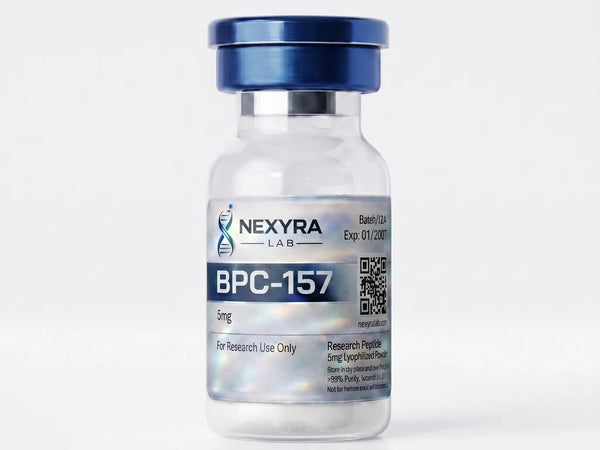
BPC-157 is a synthetic fifteen amino acid oligopeptide derived from a protein found in human gastric juice. BioSpace Its full amino acid sequence is Gly-Glu-Pro-Pro-Pro-Gly-Lys-Pro-Ala-Asp-Asp-Ala-Gly-Leu-Val. What makes it unusual is stability: unlike most peptides, it resists breakdown in gastric acid, meaning it can theoretically be administered orally and survive long enough to enter the bloodstream — a property that most injectable peptides don't share.
What makes BPC-157 unusual in the peptide research landscape is the sheer breadth of biological systems it appears to influence. Most peptides have narrow, receptor-specific mechanisms. BPC-157 keeps appearing across seemingly unrelated research domains — from tendon healing to gut protection to neurological function — suggesting a set of foundational biological mechanisms with wide downstream effects. GLP3 Planner
That breadth is both its most exciting feature and its most scientifically puzzling one.
How It Works: The Mechanisms
BPC-157 doesn't work through a single pathway. Researchers have identified several overlapping mechanisms that together explain its broad effects across different tissue types.
Angiogenesis — Building New Blood Supply
The primary way BPC-157 promotes healing is by activating the VEGF receptor 2 (VEGFR2) pathway. VEGF (Vascular Endothelial Growth Factor) is a protein that signals the body to create new blood vessels — a process called angiogenesis. Blood vessels function as the transportation network that delivers oxygen, nutrients, and repair materials to damaged tissues. Without adequate blood supply, injured tissues cannot heal properly. BioSpace
This mechanism is especially significant for tendons and ligaments, which are naturally poor in blood supply. BPC-157 appears to be particularly effective in tissues with inherently poor blood supply — such as tendons and ligaments — where inadequate vascularity is a major reason these structures heal slowly and incompletely under normal conditions. GLP3 Planner
The FAK-Paxillin Pathway — Driving Cell Migration
BPC-157 activates several overlapping pathways, notably VEGFR2 and nitric oxide synthesis via the Akt-eNOS axis, promoting angiogenesis, fibroblast activity, and neuromuscular stabilization. It also engages ERK1/2 signaling, facilitates endothelial and muscle repair, and exerts anti-inflammatory effects. GLP3 Planner
Activation of the FAK-paxillin pathway by BPC-157 results in enhanced fibroblast migration toward injury sites — a finding consistent with the accelerated wound closure observed in multiple model systems. This mechanism is particularly relevant for tendon and ligament repair, where fibroblast migration and organized collagen deposition are the rate-limiting steps in structural recovery. GLP3 Planner
Anti-Inflammatory Modulation — Smarter Than Steroids
Multiple studies document BPC-157's ability to reduce key pro-inflammatory cytokines including TNF-α, IL-6, and IL-1β. Rather than broadly suppressing inflammation (as corticosteroids do), BPC-157 appears to modulate the inflammatory response — reducing the excessive, tissue-damaging phase of inflammation while preserving the initial pro-healing inflammatory signals needed for proper repair. Unlike NSAIDs or corticosteroids, BPC-157 does not appear to impair healing while reducing inflammation. GLP3 Planner
Growth Hormone Receptor Upregulation
Growth hormone receptor was revealed as one of the most abundantly up-regulated genes in tendon fibroblasts treated with BPC-157. BPC-157 dose- and time-dependently increased the expression of growth hormone receptor in tendon fibroblasts at both the mRNA and protein levels. Drugs.com This helps explain one of BPC-157's more striking features: its effects appear to last far longer than the peptide itself remains in circulation.
Long-Lasting Effects from a Short-Lived Molecule
While BPC-157 has a very short half-life (less than 30 minutes), the angiogenic, anti-inflammatory, and tissue regeneration processes it initiates appear to persist for weeks to months in animal studies, far exceeding the peptide's pharmacokinetic presence. Animal data demonstrates that BPC-157's therapeutic effects continue long after administration stops: in spinal cord injury studies, functional improvements were maintained for up to 360 days after a single treatment, while in one tendon healing study, biomechanical improvements persisted through the 21–72 day observation period. GLP3 Planner
What the Animal Research Shows
The preclinical literature on BPC-157 spans over 30 years and hundreds of published studies. The breadth of positive findings across different injury types is genuinely striking — though it comes with an important caveat we'll address shortly.
Tendon and Ligament Healing
BPC-157 significantly accelerated the outgrowth of tendon explants. The survival of BPC-157-treated cells was significantly increased under oxidative stress. BPC-157 markedly increased the in vitro migration of tendon fibroblasts in a dose-dependent manner. New England Journal of Medicine
In preclinical models, BPC-157 improved functional, structural, and biomechanical outcomes in muscle, tendon, ligament, and bony injuries. The studies suggest that BPC-157 enhances growth hormone receptor expression and several pathways involved in cell growth and angiogenesis, while reducing inflammatory cytokines. PR Newswire
Bone Fractures
In one fracture model, BPC-157 performed similarly to autologous bone marrow injection and bone grafting, promoting callus mineralization and resolution of the bone defect with predominantly lamellar bone formation versus fibrous scar tissue. ClinicalTrials.gov
Gut and Organ Protection
BPC-157's origins as a gastric peptide are reflected in its strongest area of preclinical evidence. It has shown consistent ability to protect the gastric lining, accelerate healing of ulcers, reduce intestinal inflammation, and preserve mucosal integrity across a range of animal models — including models relevant to inflammatory bowel disease.
Neurological Effects
BPC-157 has shown neuroprotective properties in models of traumatic brain injury, spinal cord compression, and peripheral nerve transection. Animal studies have documented effects on neurotransmitter systems, particularly serotonergic and dopaminergic pathways. BioSpace
Cardiovascular Protection
BPC-157 can counteract vessel occlusion syndromes by rapidly activating collateral blood vessel pathways, effectively bypassing occluded or damaged vessels. BioSpace
Safety in Animals
Despite a wide range of doses (6 μg/kg to 20 mg/kg), routes of administration (intramuscular, intraperitoneal, intravenous, oral), and frequency assessed in several animal models, no acute lethal or toxic dose was reported. BodySpec Researchers have not been able to establish an LD50 — a lethal dose — even at amounts far exceeding standard research protocols.
The Human Trial Picture: Promising but Thin
Here is where the story gets complicated — and where it's critical to be honest.
Despite decades of promising animal research, human clinical data remains extremely limited. Only 3 published human studies exist as of early 2026 — all pilot studies with small sample sizes. The largest trial was cancelled: a 2015 Phase I study with 42 volunteers never published results. Total human subjects studied: fewer than 30 people across all published trials. No randomized controlled trials exist; all studies lack placebo controls. New England Journal of Medicine
Here's what those three studies actually found:
Study 1 — Knee Pain (2021) In a retrospective study of musculoskeletal pain following intra-articular injection of BPC-157 for unspecified chronic knee pain, 7 of 12 patients reported relief for more than 6 months. PR Newswire That's 87.5% reporting improvement — but the study had no control group, no blinding, no standardized pain scoring, and was conducted by physicians at the clinic selling the injections.
Study 2 — Interstitial Cystitis (2024) A pilot study evaluated BPC-157 in patients with interstitial cystitis, making it one of the few human trials. Eli Lilly and Company Twelve women with severe bladder pain received direct bladder injections of BPC-157, with 80–100% reporting symptom resolution. Again, no placebo control, no blinding.
Study 3 — IV Safety (2025) Two patients participated: a 58-year-old Asian male and a 68-year-old Caucasian female, each of whom had received intravenous BPC-157 before this trial. The infusions resulted in no measurable effects on biomarkers of the heart, liver, kidneys, thyroid, or blood glucose levels. The BPC-157 peptide infusion was tolerated, with no side effects reported. PubMed Central
The Cancelled 2015 Trial In 2015, a Phase I clinical trial conducted on 42 healthy volunteers was started. This study aimed to determine the safety and pharmacokinetic profile of BPC-157. Unfortunately, in 2016, the researchers cancelled submission of the results. Rheumatology Advisor No explanation was ever given publicly. We don't know if a safety signal emerged, if it was a funding issue, or something else entirely. The mystery remains one of the most important unresolved questions in BPC-157 research.
A 2025 Systematic Review: The Headline That Matters
A systematic review of English-language literature from database inception to June 2024 identified 544 articles. After duplicates were removed, 36 studies were included — 35 preclinical studies and 1 clinical study. PharmExec
Out of 544 articles spanning 30 years of research: one met the bar for inclusion as human evidence. That gap between animal promise and human proof is the defining challenge of BPC-157 research.
The Regulatory Picture
In 2023, the FDA named BPC-157 a Category 2 bulk drug substance, meaning it cannot be compounded by commercial pharmaceutical companies and that there is insufficient evidence on whether it would cause harm to humans. Nonetheless, many BPC-157 products are legally sold as "dietary supplements" or "research chemicals," classifications that are not subject to FDA regulations. PharmExec
BPC-157 was temporarily banned by the World Anti-Doping Agency (WADA) in 2022, though it is not currently listed as banned by WADA. It has not been approved for use in standard medicine by the FDA and other global regulatory authorities due to the absence of sufficient and comprehensive clinical studies confirming its health benefits in humans. Rheumatology Advisor
In Australia and New Zealand, it has been controlled as a prescription medicine — despite not actually being available for prescription anywhere. In the United States, it exists in a legal grey zone: not a scheduled substance, not FDA-approved, widely available online as a "research chemical."
The Quality Control Problem
Even setting aside efficacy questions, there's a serious practical concern with how most people actually access BPC-157.
Research peptides operate with even less oversight than supplements. When you inject a vial of "BPC-157" purchased from an overseas website, you're trusting an unregulated lab in an unregulated industry with no legal accountability for what they put in your body. As one expert noted: "It's really a choose-your-own-adventure. It's up to the chemical companies making these things to figure out quality control... It's anybody's guess what's really happening with the quality control of these unregulated peptides." BioSpace
The products marketed as BPC-157 are, according to multiple systematic reviews, unregulated for both quality and safety. Contamination rates in the broader supplement and research chemical industry run between 12% and 58%.
The Cancer Question
One concern that has appeared in the literature — and deserves mention — is the theoretical relationship between BPC-157's pro-angiogenic and growth-promoting properties and cancer risk. If BPC-157 promotes new blood vessel growth and cell proliferation generally, could it also inadvertently accelerate tumor growth?
To date, no clinical trial has specifically evaluated BPC-157's potential to promote tumors or metastasis. The fears are based on mechanism and animal data, not observed human cancer cases — simply because BPC-157 hasn't been studied in humans long enough or in enough people to see those outcomes. ClinicalTrials.gov
This doesn't mean the risk is zero. It means we don't know. With fewer than 30 total human subjects ever studied, rare or long-term adverse events would not have been detected.
The Honest Bottom Line
BPC-157 sits in a genuinely unusual position in medicine: decades of consistently positive preclinical data, almost no human trial evidence, a cancelled pivotal safety study with unexplained results, and millions of people using it anyway through unregulated channels.
The animal science is real, well-replicated, and points to mechanisms that are biologically plausible in humans. The angiogenic, anti-inflammatory, and tissue-regenerative effects documented in rodent models are based on pathways that exist in human biology. There is a legitimate scientific hypothesis worth testing.
But the history of medicine is full of compounds that worked brilliantly in animals and failed — or harmed — in humans. That's precisely why clinical trials exist. Without them, we are speculating, however educated that speculation may be.
What we can say with confidence: the short-term safety signal from the limited human data available is reassuring. What we cannot say: whether BPC-157 works in humans, at what dose, by what route, for what conditions, and what its long-term safety profile looks like. Those answers require trials that, as of March 2026, do not yet exist.
As of December 2025, no registered clinical trials for BPC-157 are actively recruiting on ClinicalTrials.gov. The research appears to be at a standstill following the cancelled 2015 Phase I study. New England Journal of Medicine
If you're considering BPC-157, the most important thing you can do is talk to a licensed medical professional who is familiar with the current state of the evidence — not a wellness influencer or an online vendor with a financial interest in your purchase. The science is genuinely interesting. It just isn't finished yet.
Disclaimer: This post is for informational and educational purposes only. It is not medical advice. BPC-157 is not approved by the FDA or any other regulatory agency for human use. Do not use this content as the basis for any personal health or medication decision. Always consult a licensed healthcare professional. Sources: PMC Systematic Review (2025) · NEJM / PubMed pilot studies · FDA Category 2 Classification (2023) · Wikipedia BPC-157 · Pharmaceuticals (MDPI, 2025) · ClinicalTrials.gov (NCT02637284)