





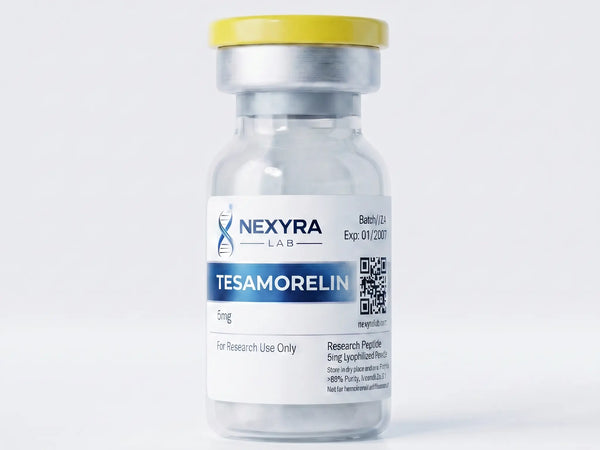






Tesamorelin: The FDA-Approved Peptide Quietly Reshaping Metabolic Medicine
Now I have comprehensive research. Here is the full blog post text:
Tesamorelin: The FDA-Approved Peptide Quietly Reshaping Metabolic Medicine
Peptide Research · March 2026 · 11 min read
In a field crowded with unproven compounds and breathless wellness claims, tesamorelin stands apart in one crucial way: it actually has FDA approval, real Phase 3 trial data, and a growing body of randomized controlled research. It is the only peptide approved in the United States specifically to treat excess visceral abdominal fat. And yet most people outside HIV medicine have barely heard of it.
That's changing. As the broader metabolic health conversation expands — driven by the GLP-1 revolution and renewed interest in visceral fat as a primary cardiovascular risk driver — tesamorelin is attracting attention from physicians, researchers, and the biohacking community alike. Here is everything the science actually supports.
What Is Tesamorelin?
Tesamorelin is a synthetic 44-amino acid polypeptide analogue of human Growth Hormone-Releasing Hormone (GHRH), developed by Theratechnologies Inc. and approved by the FDA in 2010 as the first and only medication specifically indicated for reducing excess abdominal fat in HIV-infected patients with lipodystrophy. Rheumatology Advisor
The peptide features enhanced stability and potency through N-terminal modification with a trans-3-hexenoic acid group, providing greater resistance to enzymatic degradation than endogenous GHRH. This structural enhancement results in superior therapeutic efficacy and improved pharmacological properties. ClinicalTrials.gov
In plain terms: your body naturally produces GHRH from the hypothalamus, which signals the pituitary gland to release growth hormone in pulses. In people with HIV-associated lipodystrophy — and, researchers now believe, in others with metabolic dysfunction — this pulsatile signaling is disrupted. Tesamorelin essentially restores that signal, pressing the body's own growth hormone system back into action rather than introducing exogenous growth hormone directly.
By binding to pituitary receptors, it stimulates pulsatile growth hormone release, which then increases IGF-1 and triggers downstream effects on fat metabolism, muscle, and cellular repair. A key distinction is its selectivity for visceral adipose tissue — the metabolically active fat around internal organs — rather than general subcutaneous fat under the skin. ClinicalTrials.gov
The Clinical Trial Story: From Phase 2 to FDA Approval
Unlike many peptides circulating in wellness culture, tesamorelin's path to approval followed rigorous clinical science.
Phase 2 — Dose Finding
In healthy male volunteers, tesamorelin administered subcutaneously showed a linear increase in pharmacokinetic parameters when dosed at 0.5, 1, or 2 mg per day. In Phase 2 studies comparing 1 and 2 mg doses of tesamorelin, the 2 mg dose showed better efficacy at reducing trunk and visceral fat. IGF-1 levels were found to be significantly increased relative to placebo. BioSpace
Phase 3 — LIPO-010 and CTR-1011
Tesamorelin was evaluated in two clinical trials involving 816 HIV-positive adult men and women with lipodystrophy and excess abdominal fat. Of these, 543 patients received tesamorelin during a 26-week, placebo-controlled period. In both studies, patients treated with tesamorelin experienced greater reductions in abdominal fat (15–17%) measured by CT scan, compared with patients receiving placebo injections. ClinicalTrials.gov
In the two Phase 3 clinical trials, tesamorelin was shown to significantly reduce visceral adipose tissue and to improve body image. Significant reductions in trunk fat were observed in the tesamorelin-treated group. Lean body mass increased and waist circumference decreased. Tesamorelin was found to affect metabolic biomarkers by reducing triglycerides and total cholesterol levels. BioSpace
FDA Approval and What Happened Next
The FDA approved tesamorelin in November 2010 under the brand name EGRIFTA. Patients who switched to placebo injections in the second half of cross-over studies generally saw visceral fat return within a few months ClinicalTrials.gov — establishing that tesamorelin requires ongoing use for sustained effects, a key feature of its clinical profile.
2025: A New Formulation Approved
In March 2025, the FDA approved Theratechnologies' supplemental Biologics License Application for EGRIFTA WR, a new F8 formulation of tesamorelin. This formulation replaces EGRIFTA SV, reducing patient burden by offering weekly reconstitution instead of daily, and requires less than half the injection volume of its predecessor. PR Newswire
EGRIFTA WR will be supplied as four single-patient-use vials, each containing 11.6 mg of tesamorelin, sufficient for seven doses. New England Journal of Medicine For patients managing HIV alongside multiple other medications, this simplified regimen matters practically for long-term adherence.
How It Works: The Mechanism
Understanding tesamorelin's mechanism helps explain both its approved effects and its emerging research applications.
The Hypothalamic-Pituitary Axis
Tesamorelin acts like a more durable version of your own GHRH signal, pressing the accelerator on the brain-pituitary axis to increase growth hormone in a controlled, physiologic pattern. This rise in GH and IGF-1 enhances lipolysis, fat oxidation, and cellular repair while maintaining the normal feedback mechanisms that help prevent pathological hormone excess. ClinicalTrials.gov
This last point is clinically important. Direct growth hormone administration — which has been used and abused in performance contexts for decades — bypasses the body's own feedback systems, causing supraphysiological GH levels and the associated side effects: fluid retention, insulin resistance, joint pain, and over time, potential contribution to insulin-like growth factor-mediated pathologies. Tesamorelin avoids this by working upstream, allowing the feedback loop to remain intact.
Selective Visceral Fat Targeting
Tesamorelin stimulates growth hormone secretion, and subsequently increases IGF-1 and IGFBP-3 levels. No clinically significant changes in the levels of other pituitary hormones, including thyroid-stimulating hormone, luteinizing hormone, adrenocorticotropic hormone and prolactin, were observed in patients receiving EGRIFTA in clinical trials. PharmExec
The selective action on visceral rather than subcutaneous fat is a defining feature. Visceral adipose tissue — the fat that wraps around the liver, pancreas, and intestines — is far more metabolically damaging than subcutaneous fat. It drives systemic inflammation, insulin resistance, dyslipidemia, and cardiovascular risk to a degree that subcutaneous fat does not. Reducing it specifically, without affecting lean muscle mass, is clinically meaningful in a way that general weight loss is not.
Key Clinical Results at a Glance
- 15–19.6% average visceral adipose tissue reduction at 26 weeks (Phase 3)
- Significant reductions in triglycerides and total cholesterol
- Lean body mass preserved or increased
- Improved body image scores (patient-reported)
- 37% relative reduction in liver fat at 12 months (NAFLD trial, Lancet HIV)
- Fibrosis progression prevented in HIV-associated NAFLD
- Waist circumference meaningfully reduced
- Cardiovascular risk markers improved in visceral fat responders
Beyond Lipodystrophy: The Expanding Evidence Base
Tesamorelin's approved indication is narrow — HIV-associated lipodystrophy — but the research has expanded substantially into other conditions driven by similar underlying mechanisms.
Non-Alcoholic Fatty Liver Disease (NAFLD)
This is where tesamorelin's research story has grown most significantly. Treatment with tesamorelin, a synthetic growth hormone-releasing hormone, reduced liver fat content and reduced the progression of liver fibrosis in people with HIV who had non-alcoholic fatty liver disease, researchers reported in The Lancet HIV. Honest Care
In a randomized, double-blind, multicenter trial, 61 men and women with HIV infection and hepatic fat fraction of 5% or greater were randomized to receive tesamorelin 2mg daily versus identical placebo for 12 months. Tesamorelin reduced hepatic fat fraction compared to placebo, with an absolute effect size of −4.1%, corresponding to a −37% relative reduction. BodySpec
Using gene set enrichment analysis, researchers found that tesamorelin increased hepatic expression of hallmark gene sets involved in oxidative phosphorylation and decreased hepatic expression of gene sets contributing to inflammation, tissue repair, and cell division. Tesamorelin also reciprocally up- and downregulated curated gene sets associated with favorable and poor hepatocellular carcinoma prognosis respectively. GLP3 Planner
This molecular-level evidence goes beyond simple fat reduction, suggesting tesamorelin may alter the fundamental gene expression patterns driving liver disease progression. A prospective Phase 2 trial in targeted NAFLD patients is ongoing.
Cognitive Function
A 2022 study in Neurology examined tesamorelin's effects on cognitive performance in older adults with mild cognitive impairment, reporting improvements in executive function measures. These preliminary findings suggest potential future applications in cognitive health, though FDA approval for such uses would require extensive additional clinical trials. ClinicalTrials.gov
The growth hormone axis has long been known to influence brain function, neuroplasticity, and cognitive aging. The hypothesis that restoring physiological GH pulsatility in older adults with declining function could slow or reverse cognitive changes is scientifically plausible — and actively being studied.
Cardiovascular Risk and the VAMOS Study
At the 2025 CROI conference in San Francisco, Theratechnologies presented data highlighting the limitations of using body mass index (BMI) as a sole indicator for cardiovascular risk in people with HIV. The VAMOS study emphasized the role of excess visceral abdominal fat in driving cardiovascular risk, irrespective of BMI classification. PR Newswire
This is a critical finding. It suggests that a substantial number of people assessed as "normal weight" or "overweight" by BMI alone are carrying dangerous amounts of visceral fat — and would not be identified as candidates for treatment under current screening protocols. Tesamorelin's ability to target visceral fat specifically, rather than overall weight, could make it relevant for a much wider patient population than its current label covers.
General Population Visceral Fat
Off-label use in non-HIV patients with significant visceral adiposity, metabolic syndrome, or fatty liver is already occurring in specialty and functional medicine settings. In specialty and functional medicine settings, clinicians discuss off-label use for non-HIV patients with significant visceral adiposity, fatty liver concerns, or cardiometabolic risk, after careful evaluation. ClinicalTrials.gov The evidence base here remains investigational, and the FDA has not evaluated these applications.
The Antibody Question
One of the more nuanced aspects of tesamorelin's clinical profile is the development of anti-tesamorelin antibodies in a significant proportion of patients.
In the EGRIFTA clinical trials, anti-tesamorelin IgG antibodies were detected in 50% of patients who received EGRIFTA for 26 weeks and 47% of patients who received EGRIFTA for 52 weeks. In the subset of patients with hypersensitivity reactions, anti-tesamorelin IgG antibodies were detected in 85%. Cross-reactivity to endogenous growth hormone-releasing hormone was observed in approximately 60% of patients who developed anti-tesamorelin antibodies. PharmExec
The reassuring finding: patients with and without anti-tesamorelin IgG antibodies had similar mean reductions in visceral adipose tissue and IGF-1 response. PharmExec The antibodies don't appear to neutralize the drug's clinical effect — at least not during the trial periods studied. Long-term implications of cross-reactivity to endogenous GHRH remain less well characterized.
Safety Profile: What the Trials Show
Tesamorelin has a well-documented safety profile from over 800 patients in Phase 3 trials plus ongoing post-marketing surveillance — a meaningful advantage over most peptides in this space.
Common Side Effects
The most frequently reported adverse reactions include arthralgia (joint pain), injection site reactions, pain in extremities, peripheral edema, and myalgia. These are consistent with the known physiological effects of elevated growth hormone.
The Glucose Signal
Patients receiving EGRIFTA had an increased risk of developing diabetes (HbA1c level ≥6.5%) compared with placebo (5% vs. 1%), with a hazard ratio of 3.3. PharmExec This is the most clinically significant safety finding and requires active monitoring. Patients with pre-existing glucose impairment or diabetes should use tesamorelin only with careful physician oversight and regular blood glucose testing.
Contraindications
Tesamorelin is contraindicated in patients who have disruption of the hypothalamic-pituitary axis due to hypophysectomy, hypopituitarism, pituitary tumor or surgery, head irradiation, or head trauma. Long-term cardiovascular safety has not been established. New England Journal of Medicine
It is also contraindicated in pregnancy — animal studies showed developmental abnormalities at doses approximating the clinical range — and in patients with active malignancies.
The Off-Label and Biohacking Reality
Outside its FDA-approved indication, tesamorelin is available through compounding pharmacies (unlike BPC-157, which the FDA classified as Category 2 and prohibited from compounding) and is widely discussed in longevity and body composition contexts. This is a meaningfully different situation from truly unregulated peptides: tesamorelin has a known pharmacological profile, established dosing, and documented safety data from large controlled trials.
That said, the off-label applications — general visceral fat reduction, anti-aging, cognitive enhancement — have substantially less evidence than the HIV lipodystrophy indication. Applying findings from a population with specific hormonal dysregulation (reduced pulsatile GH due to HIV and antiretrovirals) to the general population requires caution. The mechanism is plausible, but the clinical evidence in non-HIV populations is limited.
Anyone considering tesamorelin outside of its approved indication should work with a physician experienced in peptide therapeutics who can monitor IGF-1 levels, glucose, and response over time.
How It Compares in the Peptide Landscape
Tesamorelin occupies a genuinely unique position. It is not a GLP-1 agonist and does not work through appetite suppression or delayed gastric emptying. It does not produce the dramatic total-body weight loss seen with semaglutide or tirzepatide. What it does — with more clinical evidence than any other peptide in widespread use — is selectively reduce the most dangerous category of fat in the body, preserve lean muscle, and improve metabolic markers including liver enzymes, triglycerides, and inflammatory indices.
For patients where visceral fat is the primary concern — rather than total body weight — tesamorelin's mechanism is arguably more precisely targeted than any currently available alternative.
The Bottom Line
Tesamorelin is the rarest thing in peptide therapeutics: a compound with genuine FDA approval, rigorous Phase 3 data, a growing base of randomized controlled trial evidence in secondary indications, and a mechanism that is well understood and biologically distinct from every other fat-reduction drug on the market.
Its limitations are real. It requires ongoing use for sustained effects. It carries a meaningful glucose risk requiring monitoring. Its long-term cardiovascular safety has not been established. And its approved indication remains narrow — for now.
But as research expands into NAFLD, cognitive function, cardiovascular risk, and general metabolic disease, tesamorelin may prove to be one of the most clinically versatile peptides in the therapeutic arsenal. The evidence base is growing, the mechanism is sound, and — crucially — the safety profile is documented in ways that almost nothing else in this space can claim.
In a world of peptide hype, tesamorelin is the real thing. The science just took a while to catch up to the conversation.
Disclaimer: This post is for informational and educational purposes only. It is not medical advice. Tesamorelin is FDA-approved only for the reduction of excess abdominal fat in HIV-infected patients with lipodystrophy. Off-label use should only occur under physician supervision. Consult a licensed healthcare professional before considering any peptide therapy. Sources: FDA Prescribing Information EGRIFTA WR (2025) · Lancet HIV NAFLD Trial (2019) · Phase 3 Pooled Analysis, JCEM (2010) · Contagion Live (March 2025) · PubMed/NIH · JCI Insight (2020) · ScienceDirect