
Mots-c vs NAD+
MOTS-c and NAD+ are both subjects of active longevity and metabolic ageing research, and both originate from mitochondrial biology — but they are distinct in class, mechanism, and the level at which they interact with cellular physiology. MOTS-c is a 16-amino-acid peptide encoded within the mitochondrial genome (specifically within the 12S rRNA gene), making it one of a small class of mitochondria-derived peptides (MDPs). It acts as a signalling molecule: MOTS-c translocates to the nucleus under metabolic stress, where it regulates gene expression related to AMPK activation, AICAR-dependent folate cycle disruption, and glucose and lipid metabolism. Its circulating levels decline with age in humans, and preclinical studies have demonstrated improvements in insulin sensitivity, exercise capacity, and longevity markers following exogenous administration. NAD+ (nicotinamide adenine dinucleotide) is not a peptide but a coenzyme — a small molecule central to cellular energy metabolism. It serves as an electron carrier in oxidative phosphorylation (NAD+/NADH cycling) and as a substrate for sirtuins (SIRT1–7), PARP enzymes, and CD38. NAD+ levels decline with age in multiple tissues, and this decline is mechanistically linked to mitochondrial dysfunction, impaired sirtuin signalling, and reduced metabolic resilience. Supplementing NAD+ directly supports the substrate pool available to these critical enzymes. Researchers studying the intersection of mitochondrial signalling, metabolic ageing, and longevity biology use MOTS-c and NAD+ to examine complementary arms of the same underlying system: MOTS-c as a peptide signal that modulates how cells respond to metabolic stress, and NAD+ as the metabolic currency those pathways depend on.
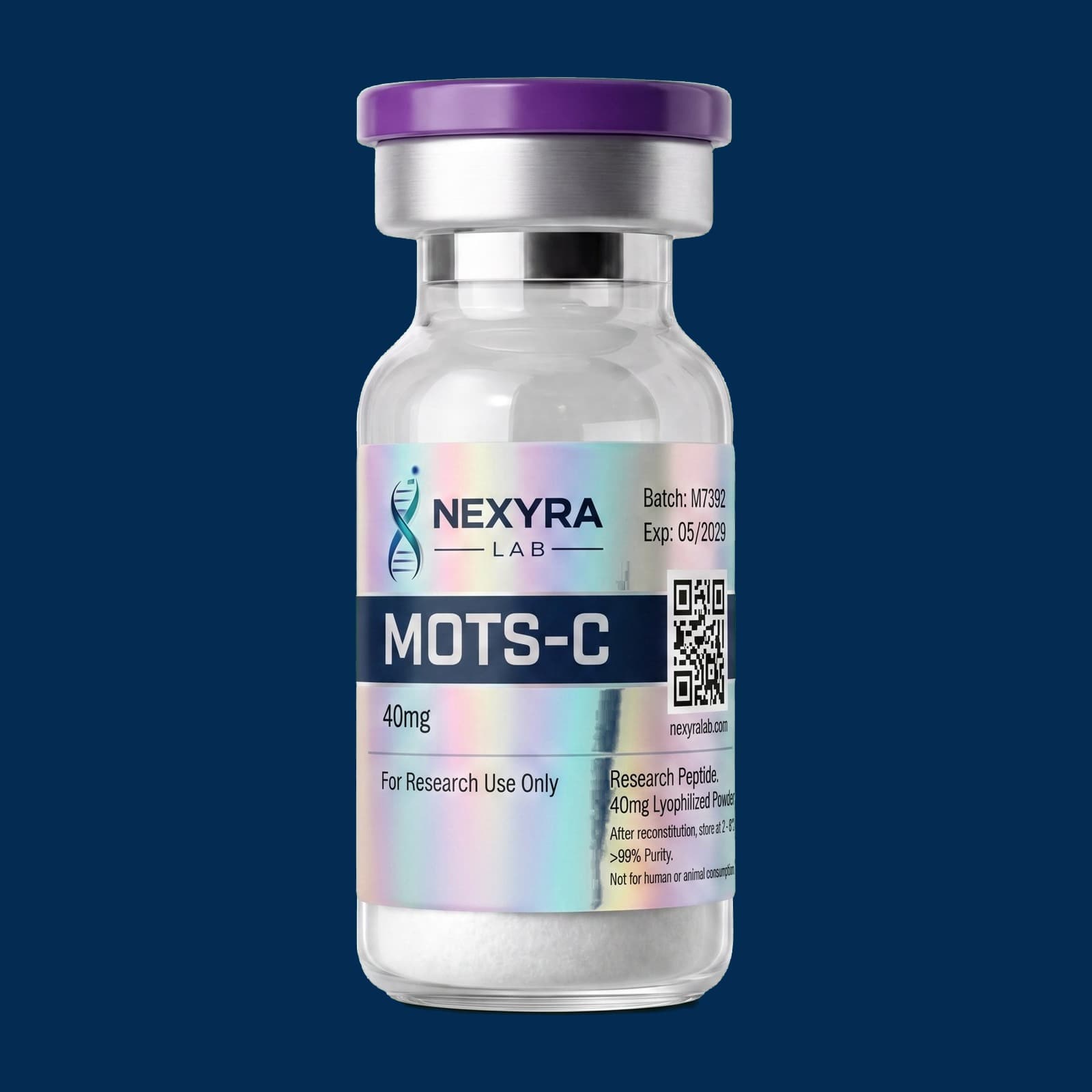
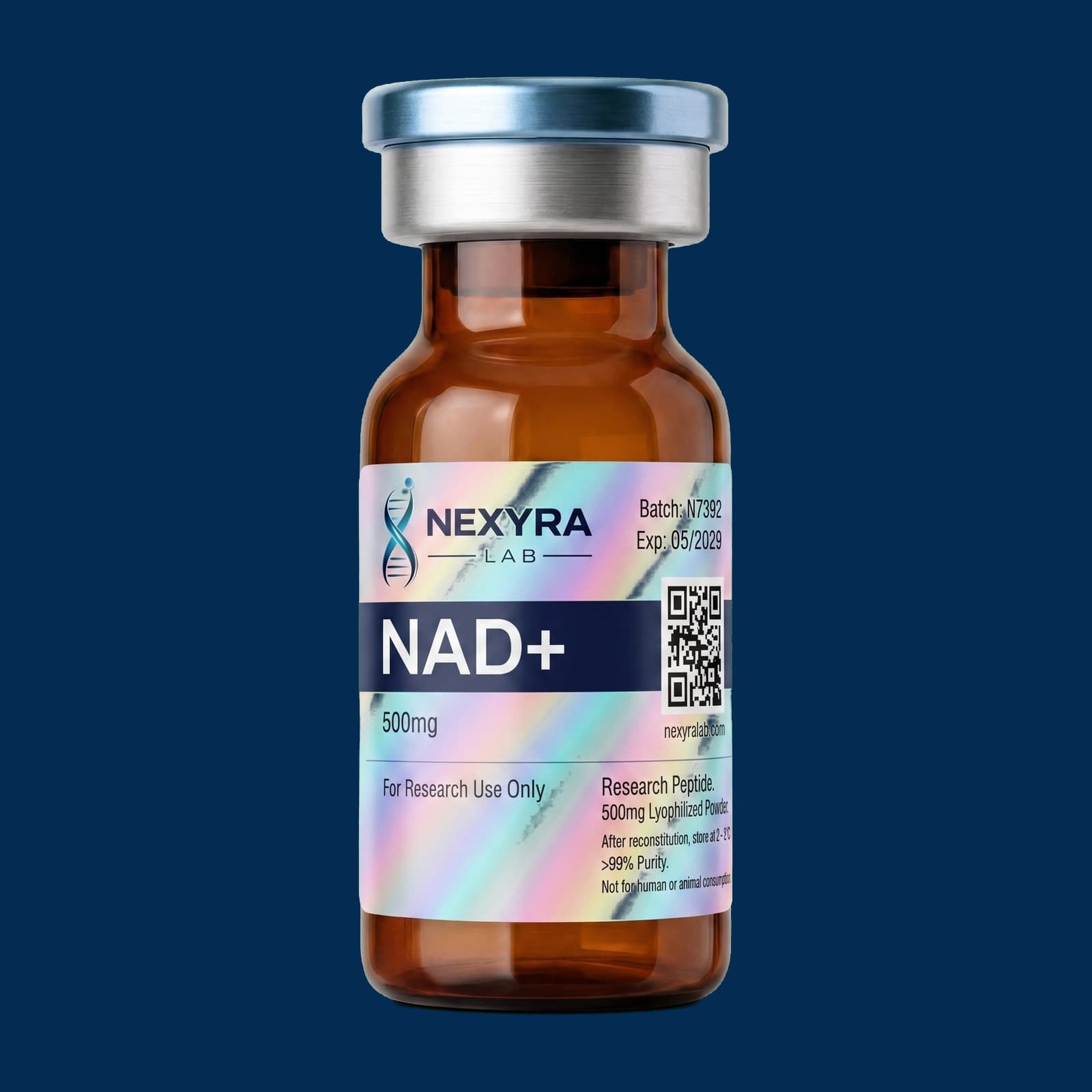
Purity and storage specifications are consistent across all Nexyra Lab lyophilised compounds. Pharmacokinetic data (half-life etc.) is not shown as it requires owner-confirmed verified references. For research planning and laboratory use only.
Other comparisons
For research planning and laboratory use only. Not medical or dosing advice. All products are for research purposes only and not for human or veterinary use.


