BPC-157 vs TB-500 (Thymosin Beta-4)
BPC-157 (Body Protection Compound 157) and TB-500 (Thymosin Beta-4 fragment) are two of the most extensively published regenerative peptides in preclinical research. Both are associated with tissue repair and recovery, but they act through mechanistically distinct pathways. BPC-157 is a synthetic pentadecapeptide derived from human gastric juice, primarily studied for its effects on angiogenesis, growth factor signalling (VEGFR2, EGFR), and collagen synthesis. TB-500, the bioactive fragment of Thymosin Beta-4, is primarily studied for its role in actin regulation, cell migration, and endothelial function. Researchers often study these compounds in combination given their complementary mechanisms, though they can also be studied independently depending on the experimental objective.
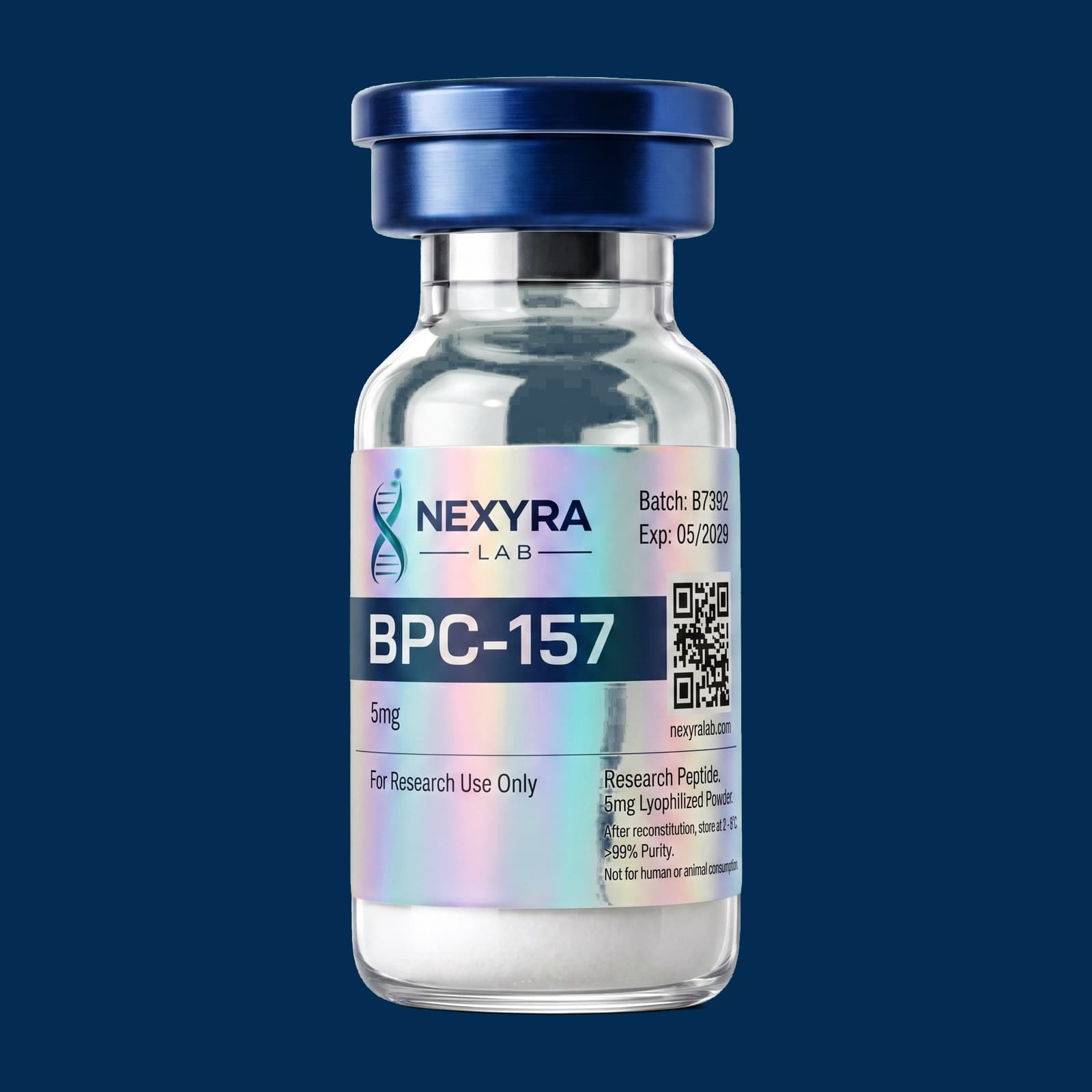
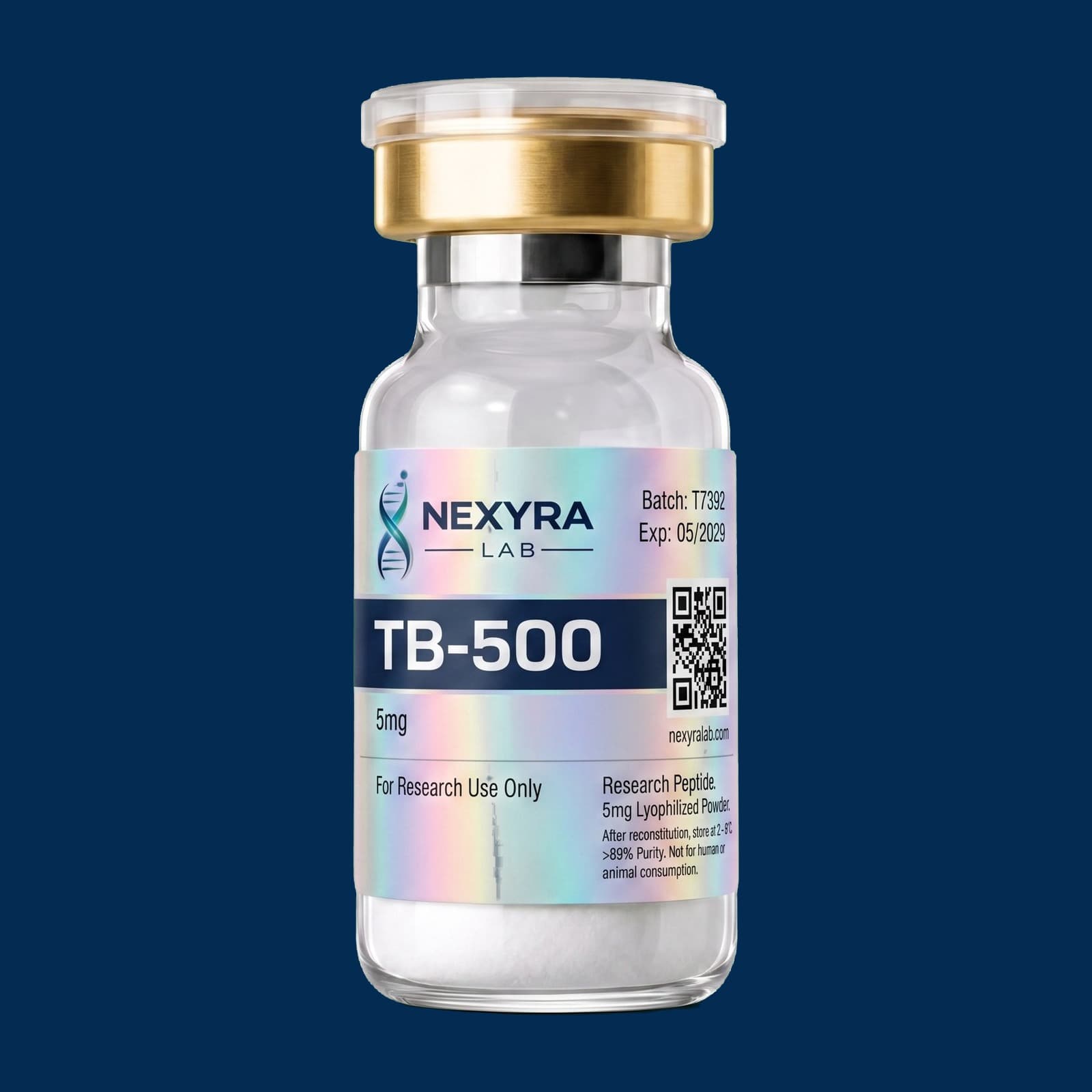
Purity and storage specifications are consistent across all Nexyra Lab lyophilised compounds. Pharmacokinetic data (half-life etc.) is not shown as it requires owner-confirmed verified references. For research planning and laboratory use only.
Other comparisons
For research planning and laboratory use only. Not medical or dosing advice. All products are for research purposes only and not for human or veterinary use.


