
Ipamorelin vs HGH Peptide
Ipamorelin and HGH Peptide both target the growth hormone axis but represent fundamentally different research approaches. Ipamorelin is a selective GHRP (growth hormone releasing peptide) — a synthetic pentapeptide that stimulates the ghrelin receptor (GHSR-1a) to trigger endogenous GH secretion from the pituitary. It works within the natural regulatory architecture: pituitary somatostatin tone continues to modulate the GH response, and the resulting GH pulses mirror the physiological pattern. HGH Peptide, by contrast, is recombinant human growth hormone itself — the 191-amino-acid protein normally produced by the pituitary. Administering it exogenously bypasses the endogenous secretion pathway entirely and delivers GH directly into the system without pulsatile regulation. From a research perspective, this distinction is significant: Ipamorelin studies test the capacity and responsiveness of the pituitary-GHSR axis, while HGH Peptide studies examine the downstream effects of sustained, exogenous GH elevation on target tissues such as liver, muscle, bone, and adipose. Researchers studying secretagogue pharmacology, GHSR receptor biology, or pulsatile GH kinetics typically select Ipamorelin; researchers studying IGF-1 downstream signalling, tissue anabolism, or direct GH target-organ effects typically select HGH Peptide.
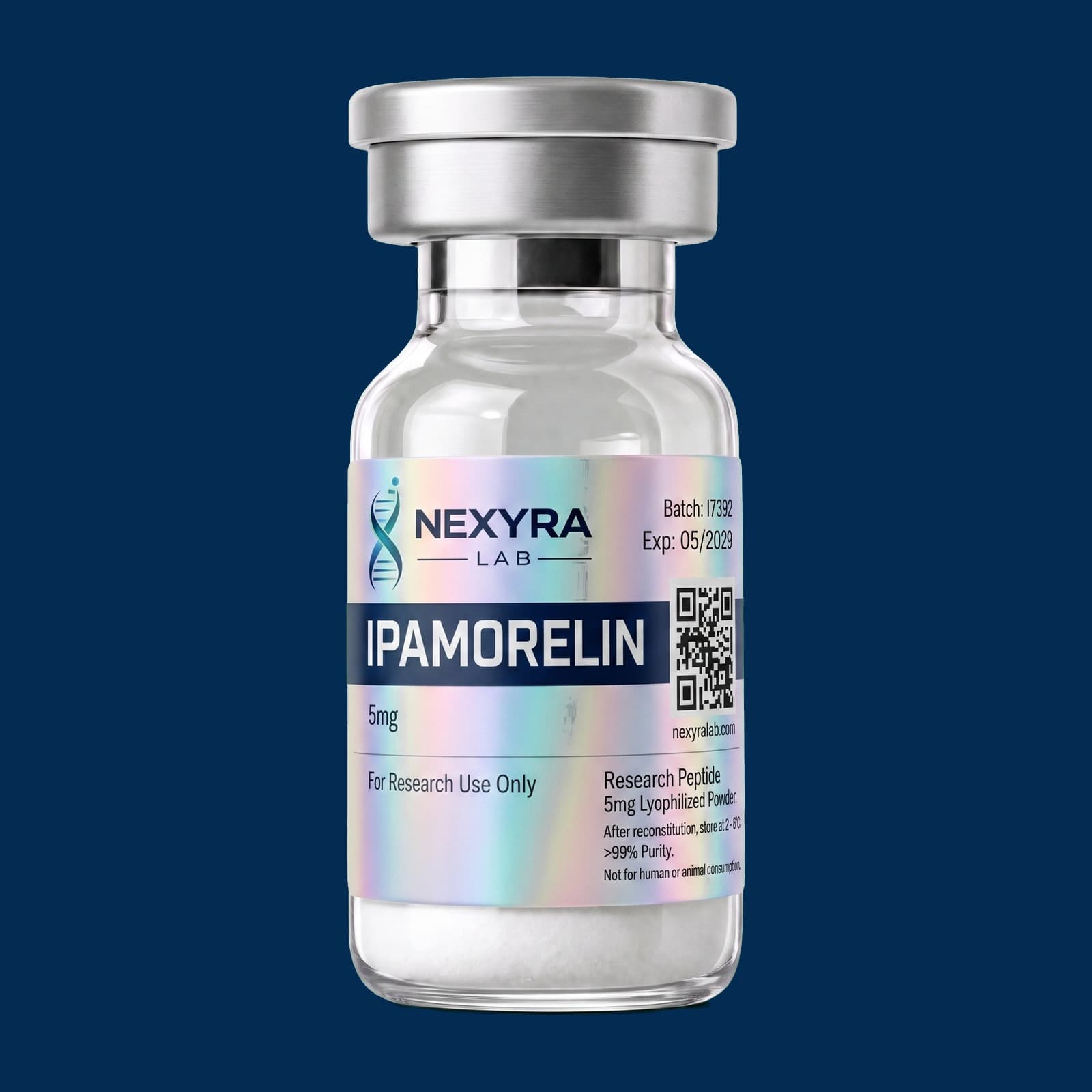
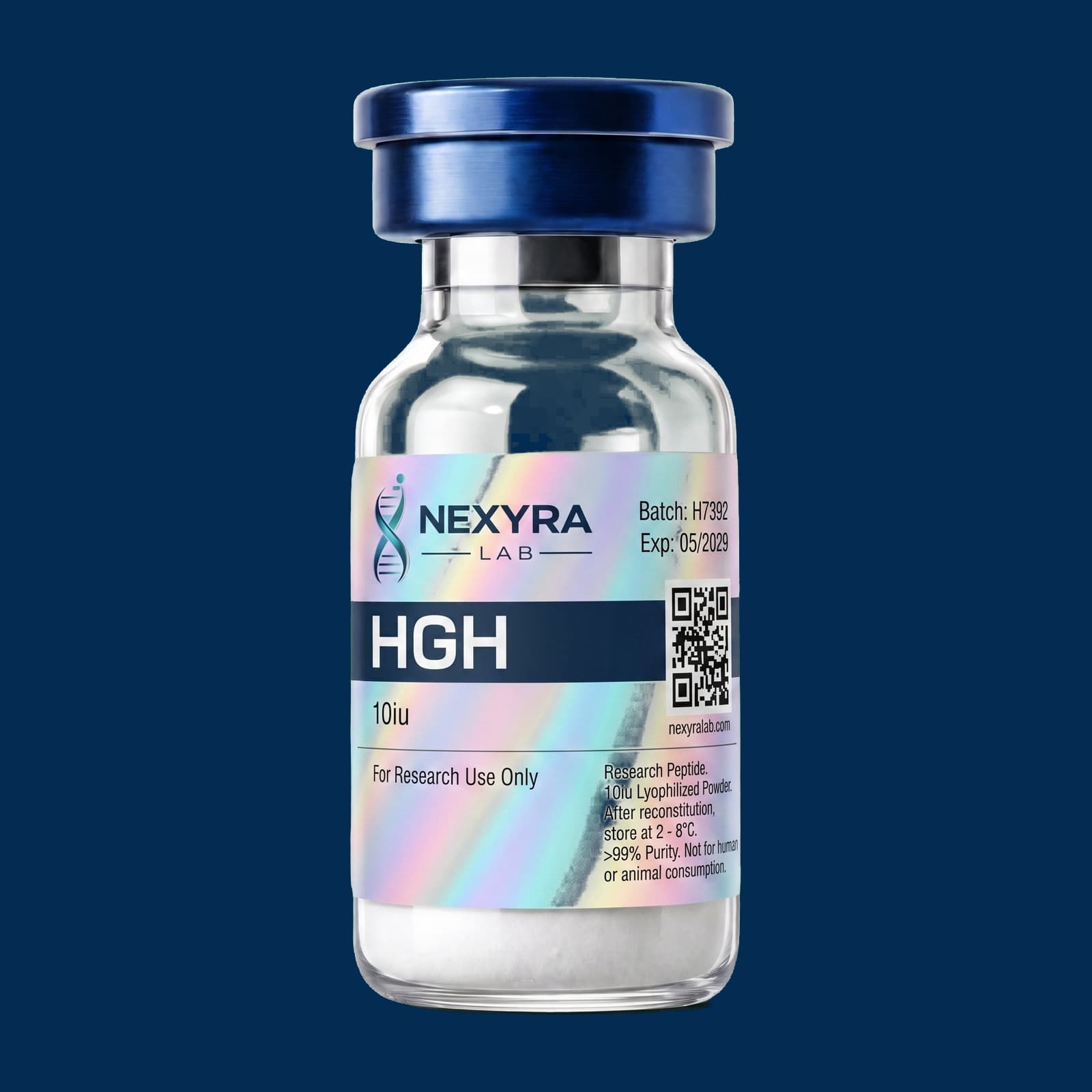
Purity and storage specifications are consistent across all Nexyra Lab lyophilised compounds. Pharmacokinetic data (half-life etc.) is not shown as it requires owner-confirmed verified references. For research planning and laboratory use only.
Other comparisons
For research planning and laboratory use only. Not medical or dosing advice. All products are for research purposes only and not for human or veterinary use.


