

1 / 1




1 / 1








Description
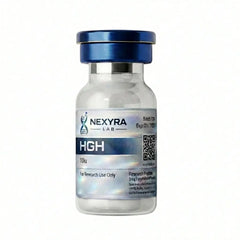
xHGH | Somatotropin | Recombinant Human Growth Hormone (rhGH) | Research Peptide
Also Known As: Somatotropin, rhGH, Growth Hormone (GH), HGH Molecular Structure: 191-amino acid single-chain polypeptide, four-helix bundle Molecular Formula: C₉₉₀H₁₅₂₈N₂₆₂O₃₀₀S₇ Molecular Weight: 22,124 Da Purity: >99% (HPLC verified) Form: Lyophilised powder Available Sizes: 5mg | 10mg Storage: 2–8°C (refrigerated); –20°C for long-term storage CAS Number: 12629-01-5
What Is HGH (Somatotropin)?
Human Growth Hormone (HGH), formally known as somatotropin, is a 191-amino acid single-chain polypeptide produced naturally by somatotropic cells within the anterior pituitary gland. It is one of the most structurally and functionally characterised hormones in human biology, and one of the longest-studied peptide hormones in the scientific literature — with research dating back to the 1950s. Its characteristic four-helix bundle structure is essential for binding to the growth hormone receptor (GHR), and this interaction underlies the full spectrum of its biological activity.
HGH production is tightly regulated by several complex feedback mechanisms in response to stress, exercise, nutrition, sleep, and growth hormone. The primary regulatory factors are growth hormone-releasing hormone (GHRH), produced in the hypothalamus; somatostatin, produced in various tissues throughout the body; and ghrelin, produced in the gastrointestinal tract. The net result of these interlocking regulatory signals is a pulsatile release pattern — with the largest secretory pulses occurring during deep sleep — that produces circulating HGH levels which peak during adolescence and decline progressively with age thereafter.
The recombinant human growth hormone (rhGH) supplied here is produced via recombinant DNA technology, yielding a molecule that is structurally identical to endogenous pituitary-derived somatotropin. This form — abbreviated rhGH in the scientific literature — has been the standard research-grade form since recombinant production methods superseded cadaveric extraction in the 1980s, and it remains the reference compound for the full body of modern growth hormone research.
Our HGH is manufactured under strict quality-controlled conditions, verified to a purity of greater than 99% by High-Performance Liquid Chromatography (HPLC) and Mass Spectrometry (MS), and supplied as a lyophilised (freeze-dried) powder for optimal stability and shelf life.
Research Background & Scientific Interest
HGH has one of the most extensive and mature research profiles of any peptide in existence — with over six decades of published science spanning endocrinology, cell biology, metabolic medicine, musculoskeletal research, cardiovascular science, and neuroscience. Its central role in growth, metabolism, and tissue homeostasis makes it a foundational reference compound for researchers across a wide range of disciplines.
Mechanism of Action: Direct & Indirect Pathways HGH has two mechanisms of action: direct and indirect. The direct effects of HGH on the body occur through its binding to target cells, stimulating a response. The indirect effects occur primarily through insulin-like growth factor-1 (IGF-1), which hepatocytes secrete in response to elevated HGH binding to surface receptors. Once activated, the Janus-activated tyrosine kinases (JAKs) 1 and 2 bind to the latent cytoplasmic transcription factors STAT1, STAT3, and STAT5, and transport them into the nucleus, inducing increased gene transcription and metabolism to produce IGF-1 for release into the circulation. IGF-1 then mediates many of HGH's anabolic and growth-promoting effects at peripheral tissues. Researchers therefore study HGH and IGF-1 as an integrated axis rather than as independent compounds.
Growth, Cell Proliferation & Tissue Development HGH stimulates growth, cell reproduction, and cell regeneration in humans and other animals, and also stimulates production of IGF-1 and increases the concentration of glucose and free fatty acids. In the context of preclinical research, this broad anabolic and mitogenic activity makes HGH a central reference compound in studies examining skeletal growth, organ development, chondrocyte and osteoblast biology, and the regulation of cell cycle progression. Its role in cartilage and long bone development via IGF-1-mediated growth plate stimulation remains one of the most studied areas of growth hormone biology.
Metabolic Research: Lipolysis, Glucose Homeostasis & Body Composition HGH exerts direct metabolic effects that are distinct from — and at times opposing to — its IGF-1-mediated growth effects. In preclinical and clinical research, HGH has been studied extensively for its lipolytic activity: it directly stimulates hormone-sensitive lipase in adipose tissue, promoting the mobilisation of free fatty acids as an energy substrate. Simultaneously, HGH exerts anti-insulin effects by reducing peripheral glucose uptake and increasing hepatic glucose output — effects that have made the GH–IGF-1 axis a central subject in diabetes research, insulin sensitivity modelling, and metabolic syndrome studies. Researchers use rhGH as a reference compound to investigate the interaction between growth factor signalling and insulin signalling pathways, as well as the downstream effects of GH excess and deficiency states on body composition, fat distribution, and lipid metabolism.
Musculoskeletal & Anabolic Research The role of HGH in skeletal muscle biology has been a subject of sustained research interest. Preclinical studies have investigated HGH's influence on satellite cell activation, myofibrillar protein synthesis, muscle hypertrophy, and recovery from muscle injury — effects largely mediated through the GH receptor and downstream IGF-1 signalling in muscle tissue. HGH is known to help improve and increase muscle mass through a process known as hypertrophy, and also boosts protein synthesis in the body. Research has also examined HGH's effects on nitrogen retention, amino acid transport, and the balance between protein synthesis and degradation in skeletal muscle — making it an important reference compound in studies examining sarcopenia, cachexia, and muscle wasting conditions.
HGH's influence on bone mineral density and calcium metabolism has similarly attracted substantial research attention. It is also known to help improve calcium retention in cells, which leads to an increase in bone strength. Preclinical and translational research has investigated these effects in models of osteoporosis, fracture healing, and skeletal remodelling, with IGF-1 identified as a key mediator of HGH's osteoanabolic activity.
Immune System Research Another well-known function of HGH is the way it acts to stimulate the immune system. Preclinical research has investigated HGH's influence on thymic function, lymphocyte proliferation, natural killer cell activity, and cytokine production. The GH receptor is expressed on multiple immune cell types, and the GH–IGF-1 axis is now understood to play an important modulatory role in both innate and adaptive immunity. This has generated research interest in HGH's potential role in immune senescence — the age-associated decline in immune function — given the parallel decline in GH secretion observed with advancing age.
Ageing & GH Deficiency Research The progressive decline in HGH secretion with age — a phenomenon sometimes termed somatopause — is associated with a well-characterised constellation of metabolic and physiological changes including increased fat mass, reduced lean body mass, decreased bone density, impaired exercise capacity, and reduced quality of life. This relationship has made rhGH an important tool in ageing research, where it is used as a reference compound to investigate the biological consequences of GH deficiency and the mechanistic basis of age-related metabolic decline. Studies comparing GH-replete and GH-deficient animal models have been particularly valuable for delineating the specific contributions of the GH–IGF-1 axis to healthy ageing trajectories.
Cardiovascular Research The GH–IGF-1 axis exerts significant influence on cardiovascular structure and function, and has been studied extensively in both directions — deficiency and excess. In GH-deficient animal models, researchers have observed increased cardiovascular risk markers including dyslipidaemia, endothelial dysfunction, and reduced cardiac output. Conversely, GH excess models have been used to study the pathophysiology of acromegaly-related cardiomyopathy and hypertension. These two poles of the research landscape have contributed to a nuanced understanding of the dose-dependent and receptor-mediated cardiovascular effects of GH signalling.
Neuroendocrinology & CNS Research GH receptors are expressed in multiple brain regions, and HGH has been investigated in preclinical models of cognitive function, neuroprotection, and neuroendocrine regulation. Research has examined the role of the GH–IGF-1 axis in hippocampal neurogenesis, synaptic plasticity, and the regulation of mood-associated neurotransmitter systems. These findings have contributed to a growing body of evidence suggesting that the age-related decline in GH secretion may have consequences for cognitive and neurological function beyond its well-characterised metabolic effects.
Product Specifications
| Specification | Detail |
|---|---|
| Peptide | HGH — Recombinant Human Growth Hormone (rhGH) |
| Also Known As | Somatotropin, Growth Hormone (GH) |
| Structure | 191-amino acid single-chain polypeptide, four-helix bundle |
| Molecular Formula | C₉₉₀H₁₅₂₈N₂₆₂O₃₀₀S₇ |
| Molecular Weight | 22,124 Da |
| Purity | >99% (HPLC & MS verified) |
| Form | Lyophilised powder |
| Vial Sizes | 5mg, 10mg |
| Appearance | White to off-white powder |
| Solubility | Soluble in sterile water or bacteriostatic water |
| Storage | 2–8°C (short-term); –20°C (long-term, lyophilised) |
| Shelf Life | 24 months lyophilised; use reconstituted solution within 28 days (2–8°C) |
| CAS Number | 12629-01-5 |
Quality & Purity Assurance
Every batch of our recombinant HGH undergoes a rigorous multi-stage quality control and release process. Our assurance pipeline includes:
- HPLC Analysis — confirms peptide purity exceeding 99% and correct isoform profile
- Mass Spectrometry (MS) — verifies molecular identity, molecular weight, and structural integrity of the 191-amino acid sequence
- SDS-PAGE — confirms correct molecular weight band and purity under denaturing conditions
- Endotoxin Testing — ensures the product is free from bacterial endotoxins
- Certificate of Analysis (CoA) — available for every batch upon request
Full batch traceability is maintained across fermentation, purification, and quality testing. Given the complexity of the rhGH molecule relative to shorter synthetic peptides, our multi-method QC approach is particularly important for confirming correct folding, isoform composition, and bioactivity-relevant structural integrity.
Handling & Reconstitution (Research Use)
Lyophilised rhGH powder should be reconstituted by slowly adding sterile bacteriostatic water (0.3% benzyl alcohol) or sterile water for injection directly to the side of the vial — do not inject water directly onto the powder or vortex. Swirl gently until fully dissolved. The recommended reconstitution volume will depend on the experimental protocol and desired working concentration.
Once reconstituted, rhGH solution should be stored at 2–8°C and used within 28 days. For longer-term storage, aliquot the lyophilised powder prior to reconstitution and store at –20°C. Avoid repeated freeze-thaw cycles. As a larger, more complex protein than typical synthetic peptides, rhGH is more susceptible to degradation from heat, agitation, and improper storage — careful handling is essential to maintain research-grade integrity.
All handling should comply with standard laboratory safety protocols and applicable institutional or regulatory guidelines.
HGH in the Context of the GH Research Axis
HGH is the central reference compound in a broader family of growth axis research tools. Researchers frequently study rhGH alongside related compounds to dissect the upstream and downstream components of GH signalling. Growth hormone-releasing hormone (GHRH) and its analogues — including sermorelin and CJC-1295 — represent the upstream secretagogue axis, while IGF-1 and its analogues (including IGF-1 LR3) represent the primary downstream effector pathway. Growth hormone-releasing peptides (GHRPs) such as GHRP-2 and GHRP-6 offer an alternative stimulatory approach via ghrelin receptor activation, while the HGH fragment 176–191 (AOD-9604) provides a tool for investigating the specific lipolytic domain of the molecule in isolation from its growth-promoting effects.
Within our broader catalogue, rhGH occupies a distinct endocrine research niche relative to the tissue-repair focused peptides BPC-157 and TB-500, the genomic and matrix remodelling compound GHK-Cu, the mitochondrial metabolic peptide MOTS-c, the systemic hormonal triple agonist retatrutide, and the intracellular NNMT inhibitor 5-Amino-1MQ. Together, these compounds offer researchers a diverse, mechanistically broad toolkit spanning endocrine signalling, tissue biology, metabolic regulation, and cellular ageing research.
Important Notice
This product is intended strictly for in vitro research and laboratory use only. Recombinant human growth hormone is a prescription-only medicine in most jurisdictions and is not approved for non-prescription or non-therapeutic human use by the FDA, EMA, or any other regulatory authority. It is not a supplement or food product. This product must not be administered to humans or animals outside of appropriately approved and supervised clinical or veterinary contexts. By purchasing this product, the buyer confirms they are a qualified researcher and will use the compound solely for lawful scientific research purposes.
Shipping and Returns
xReturn & Refund Policy
We take pride in delivering high-quality research peptides and want every order to meet your expectations. Please take a moment to review our policy before completing your purchase.
Research Use Only
All products are strictly intended for laboratory and in-vitro research purposes. They are not formulated or approved for human consumption, veterinary use, or diagnostic application.
All Sales Are Final
Due to the sensitive and regulated nature of our products, all sales are final. We are unable to accept returns, process exchanges, or issue refunds once an order has been confirmed.
Order Accuracy
Please review your order carefully before submitting. We are committed to fulfilling every order exactly as placed and cannot assume responsibility for errors entered at checkout.
Damaged or Incorrect Orders
We stand behind every shipment we send. In the unlikely event that your order arrives damaged or contains an incorrect item, contact our team within 48 hours of delivery. Each case will be reviewed individually, and resolutions are offered at our discretion.
Your Acknowledgement
By completing a purchase, you confirm that you understand the intended use of our products and agree to the terms outlined in this policy.
Additional Information
xhtml
What You Need to Know
No guesswork. No compromise. Every peptide ships with verified purity data backed by HPLC and Mass Spectrometry analysis — because your research deserves a source you can actually trust.
| 🔬 | Purity | ≥99% — confirmed per batch |
| 🏭 | Manufactured | cGMP-certified laboratory conditions |
| 📄 | CoA | Available on request for every product |
| ❄️ | Storage | Lyophilized at -20°C | Reconstituted at 4°C |
| ⚗️ | Use | Strictly for in-vitro and laboratory research only |
Disclaimer: All products are sold for research purposes only and are not intended for human consumption, clinical trials, or diagnostic use. Not approved by the FDA.
- Choosing a selection results in a full page refresh.
Shop the look
Choose options