

Selank vs Semax: UK Researcher's Comparison Guide (2026)
Right then, let's talk about Selank and Semax. If you're a researcher in the UK looking into these peptides, you've probably come across a fair bit of information, and maybe some confusion too. This guide aims to clear things up a bit, focusing on what matters for research here in the UK. We'll look at what these compounds are, what researchers are actually studying, and how to make sure you're getting good quality stuff for your work. Think of it as a straightforward rundown, no-nonsense, just the facts for getting your research done.
Key Takeaways
- Selank and Semax are synthetic peptides used in research, not for human consumption.
- Selank is mainly studied for its effects on stress and emotional regulation pathways.
- Semax is typically researched for its role in neurotrophic support and cognitive function.
- In the UK, reputable suppliers provide batch-specific Certificates of Analysis (COAs) for research peptides like Selank and Semax.
- Researchers should always source peptides from trusted suppliers and adhere to strict laboratory use guidelines.
Understanding Selank vs Semax In The UK
Right then, let's get stuck into Selank and Semax, specifically from a UK researcher's point of view. These two peptides pop up quite a bit in discussions about nootropic comparison UK, and it's easy to see why. They're both synthetic compounds, often explored in labs for their effects on the brain and nervous system. While they share some similarities as research tools, their primary areas of investigation tend to differ. Understanding these distinctions is key for anyone looking to procure and utilise them responsibly in a research setting.
The Research Landscape For Selank And Semax
When we talk about Selank and Semax, we're generally looking at compounds that have seen a good chunk of their research originate from Eastern Europe. Here in the UK, the focus is on their use as laboratory materials for scientific inquiry. Selank, for instance, is often looked at for its potential anxiolytic properties and its relation to immune signalling pathways. Think of it as being investigated for its effects on stress and emotional regulation. On the other hand, Semax tends to be explored more for its neurotrophic and cognitive effects. Researchers might be interested in its influence on things like learning, memory, and overall brain plasticity. It's a bit like comparing two different tools in a very specialised toolbox; both useful, but for different jobs.
UK Supplier Standards For Research Peptides
If you're a researcher in the UK, you'll know that quality and traceability are paramount. Suppliers of research peptides like Selank and Semax here have to meet certain standards. You'll typically find that reputable suppliers provide batch-specific Certificates of Analysis (COAs). These documents are pretty important, detailing the purity of the compound, often verified by methods like High-Performance Liquid Chromatography (HPLC). This gives you confidence that what you're using in your experiments is what you think it is. It's all about ensuring the integrity of your research, avoiding any nasty surprises down the line.
Navigating Research Material Procurement
Procuring these research materials in the UK involves a few considerations. It's not like nipping to the chemist for paracetamol; these are specialised substances. You'll want to make sure you're dealing with suppliers who are transparent about their products and adhere to strict quality control. This means looking for those COAs we just talked about and understanding the supplier's commitment to providing materials solely for legitimate research purposes. It’s about making informed choices to support your experimental work effectively. For example, understanding the Selank benefits UK researchers might explore requires access to well-characterised material.
It's vital to remember that both Selank and Semax are supplied strictly for laboratory research. They are not intended for human or veterinary use, nor are they approved as medicines or supplements. Any use outside of a controlled research environment is not supported and goes against the terms of supply.
Here's a quick rundown of what to look for:
- Certificate of Analysis (COA): Always check for a batch-specific COA.
- Purity Verification: Look for confirmation of purity, usually via HPLC.
- Supplier Reputation: Choose suppliers known for their transparency and adherence to standards.
- Intended Use: Confirm the product is clearly labelled for research purposes only.
When you're looking into Semax effects UK researchers might be investigating, having reliable, well-documented materials is the first step. It really does make all the difference to the validity of your findings.
Selank: Mechanisms And Research Focus
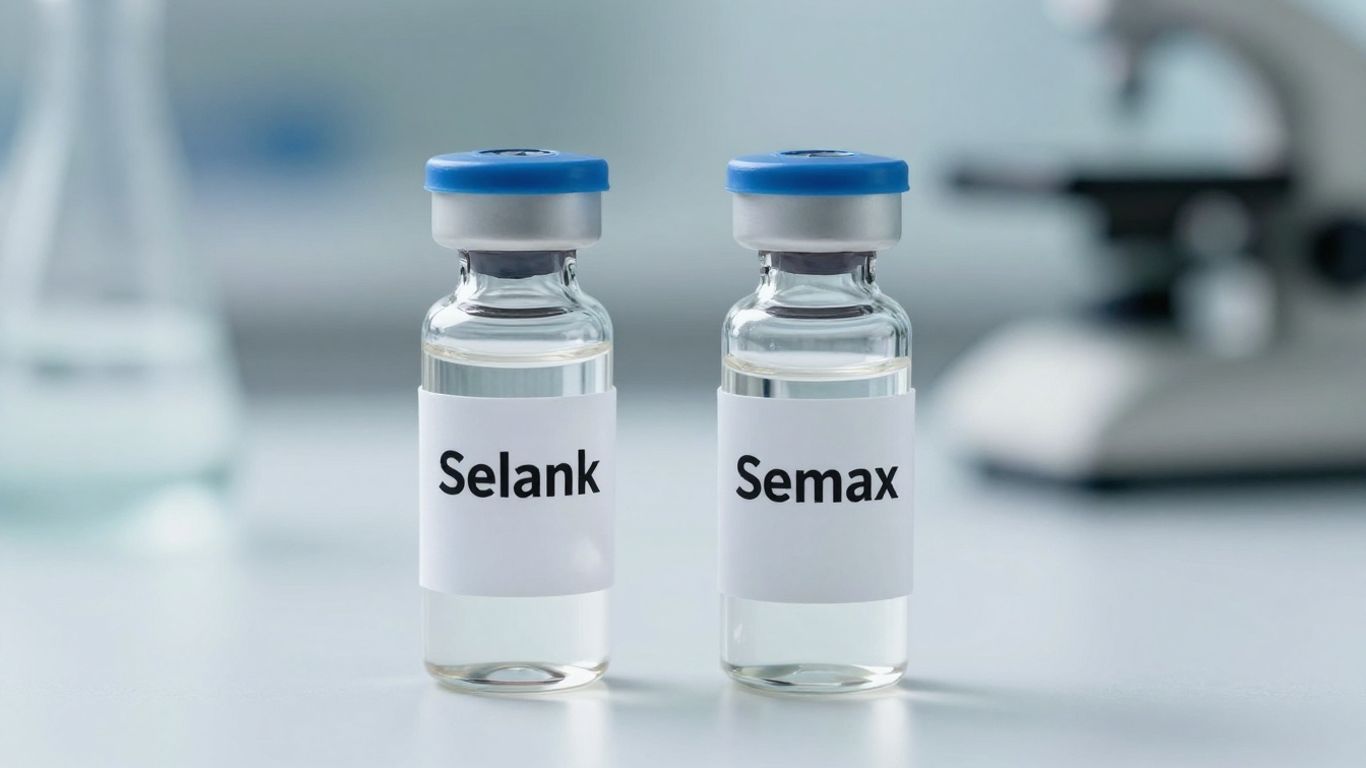
Selank, a synthetic peptide, has garnered attention in research circles primarily for its potential effects on stress response and emotional regulation. Developed as a variation of tuftsin, a naturally occurring immune signalling molecule, Selank appears to bridge the gap between immune function and central nervous system activity. Researchers are particularly interested in how it interacts with the brain's chemical messengers.
Selank's Relation To Tuftsin And Immune Signalling
Structurally, Selank is an analogue of tuftsin, a peptide fragment found in immunoglobulin G. Tuftsin itself is known for its role in the immune system, influencing things like phagocyte activity. However, studies have also hinted at broader effects, including those impacting mood and cognitive processes. This connection suggests that Selank might influence the brain through pathways that are also involved in immune responses, a fascinating area for research into immune signalling.
Investigating Selank's GABAergic And Serotonergic Pathways
Much of the research into Selank's mechanisms centres on its interaction with key neurotransmitter systems. It's thought to influence both GABAergic and serotonergic pathways. The GABAergic connection is particularly noteworthy, as it suggests Selank might act similarly to benzodiazepines by increasing the inhibitory effects of GABA, a neurotransmitter that promotes calmness. This could explain its anxiolytic properties observed in preclinical models. The serotonergic influence, meanwhile, is being explored in relation to mood regulation and emotional processing.
- GABAergic Action: Modulates GABA-A receptors to increase inhibitory neurotransmission.
- Serotonergic Action: Influences serotonin levels, potentially impacting mood and emotional states.
- Comparison to Benzodiazepines: While sharing some mechanisms, Selank is investigated for potentially fewer side effects like amnesia or dependence.
Preclinical Exploration Of Selank's Anxiolytic Properties
In laboratory settings, Selank has been studied for its potential to reduce anxiety-like behaviours. These investigations often use animal models designed to mimic aspects of stress and anxiety. The findings from these studies suggest that Selank could be a subject of interest for understanding how to modulate stress responses at a neurochemical level. It's important to remember that these are preclinical findings, and the transition to human application requires extensive further study.
The exploration of Selank's effects on neurotransmitter systems provides a basis for understanding its observed behaviours in experimental setups. This focus on mechanism is key for researchers aiming to map out how such compounds interact with biological systems in a controlled environment.
Semax: Neurotrophic And Cognitive Research
When we look at Semax, the research focus shifts quite a bit from Selank. Instead of stress and mood, Semax is primarily investigated for its potential to support brain health and improve cognitive functions. It's often discussed in the context of neurotrophic signalling, which is basically how brain cells communicate and adapt. This makes it an interesting subject for those exploring cognitive enhancers UK for research purposes.
Semax As A Derivative Of Adrenocorticotropic Hormone
Semax is a synthetic peptide, meaning it's created in a lab. It's built on a fragment of a hormone called ACTH, specifically ACTH(4-10). Now, don't let the hormone connection fool you; Semax isn't really studied for its hormonal effects. Researchers are more interested in how this specific structure influences brain activity. The idea is that by modifying the original fragment, they've created something that can cross the blood-brain barrier more effectively and target specific pathways within the central nervous system. It's a 7-amino acid peptide with the sequence Met-Glu-His-Phe-Pro-Gly-Pro. The ACTH link is mainly there because this structure seems to retain some useful neurobiological effects without the broader hormonal actions.
Exploring Semax's Influence On BDNF And Neuroplasticity
One of the main reasons Semax is a subject of interest in UK nootropic research is its apparent ability to influence Brain-Derived Neurotrophic Factor (BDNF). BDNF is a protein that plays a big role in the survival of existing neurons and the growth of new ones. It's also key for synaptic plasticity, which is how our brains adapt and form new connections – pretty important for learning and memory. Researchers study how Semax might increase BDNF levels, particularly in areas of the brain like the hippocampus and cortex, which are heavily involved in memory and learning.
Here's a quick look at what researchers are examining:
- BDNF Upregulation: Studies look at how Semax affects the concentration and expression of BDNF. This is significant because BDNF is central to neuronal survival, plasticity, memory formation, and neurogenesis.
- TrkB Receptor Expression: Semax is also studied for its impact on the TrkB receptor, which is the main receptor for BDNF. Changes here support the idea that Semax is relevant in models of synaptic plasticity and neuroadaptation.
- Hippocampal and Cortical Signalling: Research often focuses on how Semax influences signalling pathways within these specific brain regions, linking it to memory consolidation and higher-level cognitive processes.
The core research idea is that BDNF acts like a support signal for neuronal growth and adaptation. Semax is studied as a peptide that can shift this neurotrophic environment in measurable ways, making it distinct from simple stimulants.
Semax In Models Of Cerebral Blood Flow And Metabolism
Beyond its effects on neurotrophic factors, Semax is also explored in research settings for its potential impact on cerebral blood flow and brain metabolism. Studies have looked at how it might influence these areas, particularly under conditions of stress or reduced oxygen supply (hypoxia) or during periods of restricted blood flow (ischemia). The idea is that Semax could play a role in protecting neurons and maintaining brain function during challenging physiological states. It's also examined for its influence on monoamine systems, which are linked to mood, motivation, and attention, further broadening its research scope as a cognitive and neuroadaptive agent.
- Neuroprotection: Semax is studied in models of hypoxia, ischemia, and oxidative stress because it appears to influence pathways tied to neuronal survival and adaptive responses under stress.
- Metabolic Adaptation: Researchers investigate its role in how the brain adapts its energy use, especially during challenging conditions.
- Cerebral Blood Flow: Studies examine potential changes in blood flow to the brain, which is vital for delivering oxygen and nutrients.
It's important to remember that these studies are conducted in controlled laboratory or preclinical models. The information is for scientific and laboratory reference only, and Semax is supplied strictly for research purposes, not for human or veterinary consumption.
Comparative Research Applications
When you start looking at Selank and Semax side-by-side for research purposes, it quickly becomes clear they're not quite interchangeable, even though they're both peptides. They tend to be investigated for pretty different reasons, which shapes the kinds of experiments researchers set up.
Contrasting Research Interests: Stress vs. Cognition
Selank is often the peptide of choice when the research focus is on stress, anxiety, and emotional regulation. Think of studies looking into how the body and brain respond to stressful situations. It's frequently explored for its potential links to the GABAergic system, which is a major inhibitory system in the brain, and its effects on mood and anxiety levels. The primary research interest for Selank revolves around its influence on stress-response and emotional regulation pathways.
Semax, on the other hand, usually pops up in research looking at cognitive function, neuroplasticity, and neuronal health. Studies involving Semax often investigate its impact on things like memory, learning, and how the brain adapts to new information or damage. It's explored for its neurotrophic properties, meaning its ability to support the growth and survival of nerve cells, and its influence on pathways like BDNF (Brain-Derived Neurotrophic Factor).
Common Experimental Models For Each Peptide
To get a clearer picture, here’s a quick rundown of the typical models you might see for each:
- Selank Models:
- Anxiety and fear conditioning models
- Stress-induced behavioural changes
- Models of learning and memory where anxiety might be a confounding factor
- Semax Models:
- Learning and memory tasks (e.g., maze navigation)
- Neuroprotection studies (e.g., in models of stroke or hypoxia)
- Studies on synaptic plasticity and neuronal resilience
Mechanistic Differences In Research
The way these peptides are thought to work in research settings also sets them apart. Selank's research often focuses on its interactions with neurotransmitter systems like GABA and serotonin, aiming to understand its anxiolytic (anxiety-reducing) effects. It's about modulating brain activity to achieve a calmer state.
Semax research, however, tends to look at its effects on growth factors and signalling pathways that promote neuron health and function. This includes its role in neurotrophic support and influencing cerebral blood flow, which is vital for brain metabolism and function. It's more about supporting and improving the brain's structural and functional capacity. You can find more details on Semax and Selank's distinct properties in various research contexts.
It's important to remember that all this research is conducted in controlled laboratory or preclinical settings. The findings are for scientific investigation and do not imply that these peptides are suitable for human use or have therapeutic applications outside of a research context. Always adhere to strict laboratory protocols and regulations when handling any research materials.
Researchers often look for specific qualities when sourcing these compounds. For instance, newly added research peptides, including Semax and Selank, are often detailed with their purity and available sizes, which is key for experimental design.
Safety And Tolerability In Research Settings
When we're looking at Selank and Semax for our research projects here in the UK, understanding how safe they are in a lab setting is pretty important. It's not like we're prescribing them, of course, but we still need to know what the existing data suggests.
Reported Tolerability In Preclinical Studies
Generally speaking, the research literature paints a fairly positive picture regarding the tolerability of both Selank and Semax in preclinical and experimental contexts. Most studies mention that the compounds were well-received by the test subjects, with few adverse events noted. However, it's worth remembering that these observations can really depend on the specific animal models used and the exact methods employed in the research.
- Selank has often been discussed in relation to its potential effects on stress and anxiety pathways. Studies looking into these areas tend to report good tolerability, especially when compared to other compounds that might be used in similar research.
- Semax, on the other hand, is frequently examined for its neurotrophic and cognitive influences. The reported tolerability in these studies is also generally favourable, with researchers noting minimal issues during experimental protocols.
- It's important to note that the absence of reported adverse effects doesn't automatically mean a compound is completely benign. It often just means that within the scope of that particular study, no significant issues were observed or reported.
Limitations Of Existing Safety Data
Now, here's where things get a bit murky. While the preclinical data is somewhat reassuring, it's really limited. Dedicated, large-scale safety studies, particularly those published in English, are quite scarce. Much of what we know comes from passing mentions in broader reviews or from studies where safety wasn't the primary focus. This means we don't have a really deep, detailed understanding of potential long-term effects or rarer side effects that might only appear under specific conditions. The information available is strictly for research awareness and doesn't imply suitability for any kind of human or veterinary use. It's a bit like looking at a weather forecast for a single day and trying to predict the entire season – you get a hint, but not the full picture.
Distinguishing Research Tolerance From Clinical Safety
This is a really key point to get straight. What we observe in a controlled laboratory setting, with specific doses and administration routes for research purposes, is not the same as clinical safety. The data we have is from experimental models, and it's crucial to remember that these peptides are supplied strictly for research and laboratory use only. They are not approved as medicines or supplements, and definitely not for human consumption. Any attempt to extrapolate findings from preclinical tolerability to human clinical safety would be a significant misstep. Researchers must always adhere to institutional policies and applicable laws when handling these materials. For those looking for verified research materials, checking for batch-specific Certificates of Analysis is a good starting point to ensure you're working with quality compounds for your experimental protocols.
Procurement And Quality Assurance For UK Researchers

Right then, let's talk about actually getting your hands on these peptides for your research here in the UK. It's not just about finding a supplier; it's about making sure what you get is actually what it says on the tin, and that it's suitable for proper lab work. You don't want to be halfway through an experiment and realise your reagents are dodgy, do you? That's a proper waste of time and money.
The Importance Of Batch-Specific Certificates Of Analysis
So, first things first, you absolutely need to be looking for a Certificate of Analysis, or COA for short. And not just any COA, mind you. It needs to be specific to the exact batch you're buying. Think of it like a unique ID card for your peptide. This document tells you all the important stuff: what the purity is, what tests were done, and when. Without a batch-specific COA, you're basically working blind. It's your main tool for making sure the material is consistent and reliable for your experiments. If a supplier can't give you one, or gives you a generic one that doesn't match the batch number on the vial, that's a massive red flag. You can find suppliers who provide this level of detail, like Nexyra Research Ltd. for example, which is a good sign they're taking quality seriously.
HPLC Verification And Purity Standards
When you're looking at that COA, you'll see mentions of things like HPLC. That stands for High-Performance Liquid Chromatography, and it's a standard way to check how pure a substance is. For research peptides, you're generally looking for a purity of 99% or higher. This isn't just some arbitrary number; higher purity means fewer contaminants that could mess with your results. The HPLC report itself, often shown as a chromatogram, is a visual representation of this purity. It should show a big main peak, indicating the peptide you want, with minimal smaller peaks that would represent impurities. If the COA doesn't include an HPLC report or if the purity is significantly lower than 99%, you should be very cautious. It's worth checking if the supplier provides other verification methods too, like mass spectrometry, which confirms the molecular weight of the peptide. This adds another layer of confidence that you've got the right stuff.
Avoiding Red Flags In Peptide Suppliers
Beyond the COA and purity checks, there are other things to watch out for when you're choosing where to buy your research peptides. If a supplier seems a bit shady, it's probably best to steer clear. Here are a few things that should make you pause:
- Unprofessional Website or Communication: If their website looks like it was built in the early 2000s, or their customer service is slow and unhelpful, that's not a great sign.
- Vague Product Descriptions: If they don't clearly state what the product is for (i.e., research use only) or provide detailed specifications, be wary.
- No Clear Shipping Information: Do they tell you where they're shipping from? Long, unexplained shipping times can sometimes indicate overseas sourcing, which can introduce more variables and potential delays.
- Claims Beyond Research Use: Any supplier hinting at human use, therapeutic benefits, or providing dosing advice is definitely one to avoid. These peptides are strictly for laboratory investigation.
- Lack of Traceability: If they can't provide clear lot numbers and link them to specific documentation, it makes it hard to track anything if something goes wrong. Reputable companies, like Biosynth, usually have robust systems for this.
Ultimately, when you're buying research peptides, you're investing in the integrity of your work. Cutting corners on quality assurance or choosing a less-than-reputable supplier can jeopardise months, or even years, of research. Always prioritise transparency, detailed documentation, and verifiable quality control measures.
Wrapping Up: Selank and Semax for the UK Researcher
So, after looking into Selank and Semax, it's pretty clear they're not your everyday supplements. Both are synthetic peptides that researchers in places like Russia have been looking at for a while, mainly for how they might affect stress, anxiety, and brain function. Here in the UK, companies like Bluewell Peptides supply them, but strictly for lab work, not for people to use. Selank seems to be studied more for stress and mood, while Semax gets a lot of attention for its potential role in learning and brain resilience. Neither is approved as a medicine, and the research available is mostly from animal studies or lab settings. It’s important to remember that these are research chemicals. If you're a researcher in the UK, always stick to the rules and use them only in a proper lab environment. Don't expect them to be a quick fix for anything, and always get your supplies from reputable sources that provide clear documentation.
Frequently Asked Questions
What exactly are Selank and Semax?
Think of Selank and Semax as special lab tools. They are man-made tiny proteins, called peptides, that scientists use in experiments. They're not medicines you'd get from a doctor, but rather materials for research labs to help them learn about how the brain works.
Why are these peptides only for research in the UK?
In the UK, companies like Bluewell Peptides sell Selank and Semax strictly for lab use. This means they haven't gone through the strict testing needed to be approved as medicines for people or animals. Using them outside of a controlled research setting isn't allowed.
How do Selank and Semax differ in what scientists study?
Scientists often look at Selank when studying things like stress and feelings, because it seems to affect brain chemicals linked to anxiety. Semax, on the other hand, is usually studied for its potential to help the brain grow and repair itself, looking at memory and learning.
What does 'Certificate of Analysis' (COA) mean for these research peptides?
A Certificate of Analysis is like a report card for the chemical. It tells researchers exactly what they're getting, confirming its purity and identity. For Selank and Semax, a COA from a reliable supplier is super important to make sure the experiment is based on accurate materials.
Can I buy Selank or Semax for personal use?
No, absolutely not. These peptides are sold only for research purposes. They haven't been approved for people to use, and buying or using them for anything other than scientific experiments is against the rules and could be risky.
How do researchers make sure they're getting good quality peptides?
Good researchers are careful about where they buy their materials. They look for suppliers who provide clear proof of quality, like detailed Certificates of Analysis and results from tests like HPLC, which checks how pure the substance is. They also avoid suppliers who make unproven claims or seem unprofessional.
Dee Jittla
Founder, Nexyra Research Ltd
Research content at Nexyra Lab is drawn from primary literature and peer-reviewed studies. Product specifications are independently verified against per-batch COA data from accredited laboratories. All content is framed for research use only — no clinical or therapeutic claims are made.
About Nexyra Lab →


